
JournalPolicy
From 9 December, black mass is hazardous waste
From 9 December 2026 black mass and most lithium-ion battery waste count as hazardous waste in the EU. Exports for recovery to countries outside the OECD, China among them, are banned. The aim is to keep more black mass in Europe for refining.
First published 30 October 2026. Corrected 4 November 2026: the rules apply from 9 December 2026, not 9 November.
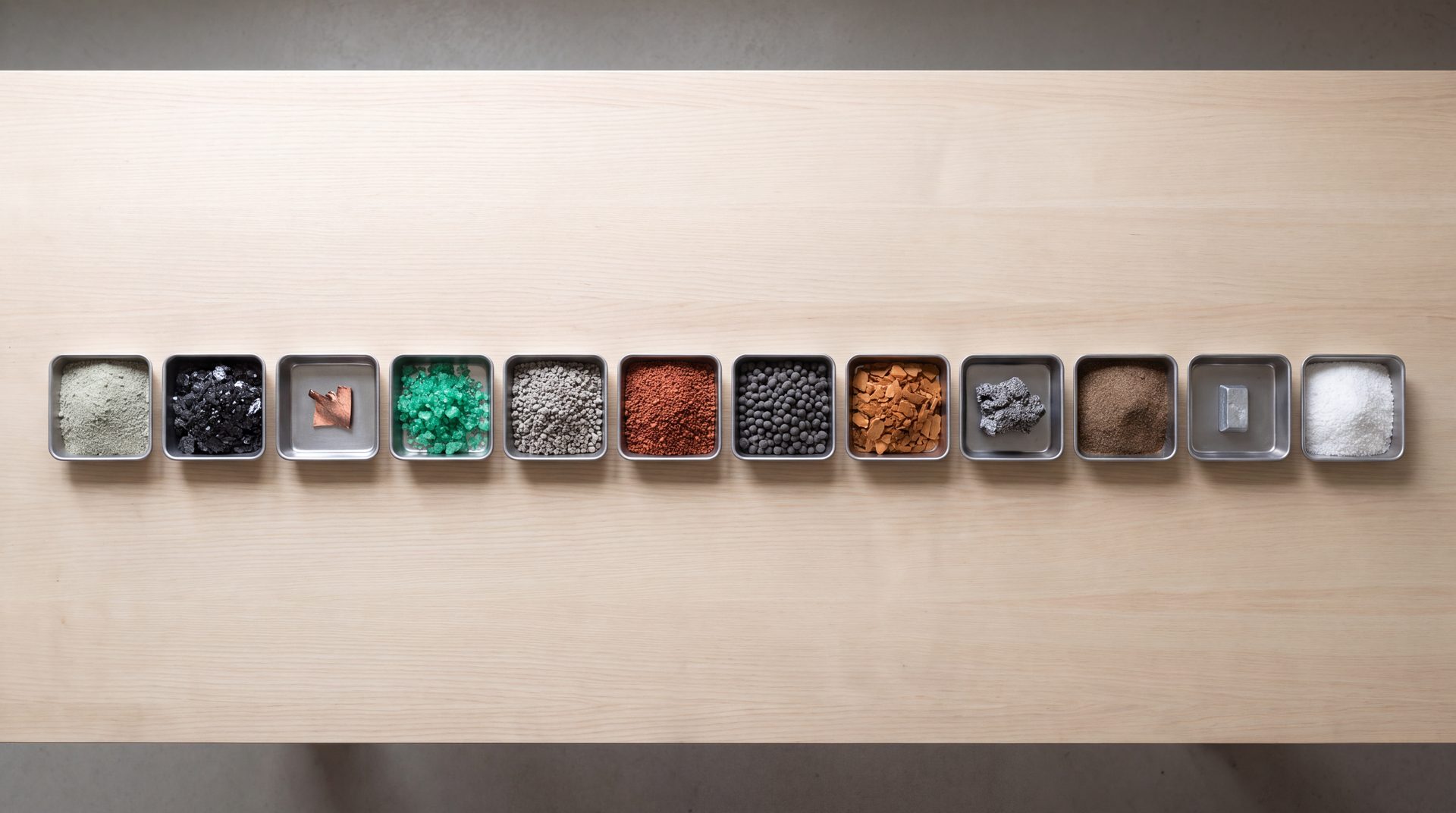
Black mass is the dark powder left when spent battery cells are discharged, shredded and sieved. It contains the electrode materials: lithium, nickel, cobalt and manganese from the cathode, and graphite from the anode. One tonne of used batteries yields about 400 kg of it.1
What changes
Commission Delegated Decision (EU) 2025/934 amends the European List of Waste and applies from 9 December 2026.2 It adds seven hazardous codes for black mass, 19 14 01* to 19 14 07*: six by battery chemistry and one for all other types. It also classifies waste lithium-based batteries as hazardous: 16 06 07*, and 20 01 43* for separately collected municipal waste.2
Hazardous waste is subject to stricter shipment rules. The Waste Shipments Regulation (EU) 2024/1157, which has applied since 21 May 2026, bans exports of hazardous waste for recovery to countries outside the OECD (Article 39), as the previous regulation did. Shipments within the EU and to OECD countries need prior written notification and consent.3
Recycling
From a used battery to new battery materials
Black mass is the powder left after spent cells are discharged, shredded and sieved. From 9 December 2026 it counts as hazardous waste in the EU.
Source: Commission Delegated Decision (EU) 2025/934, applies from 9 December 2026; Fraunhofer ISI (2025), Recycling capacities for lithium-ion batteries will exceed demand in Europe for the time being
Why it matters
In mid-2025 Europe was a net exporter of black mass, and China was seeking to import it.1 Each tonne that leaves takes its lithium, nickel and cobalt with it.
Europe has plants for the first step. Pre-treatment capacity was about 270,000 tonnes of batteries a year in mid-2025, and Fraunhofer ISI expected about 420,000 tonnes by the end of 2026, counting announced plants. Only about 100,000 tonnes of used batteries and production scrap were available for recycling. Refining capacity was about 130,000 tonnes a year in black mass equivalent, but only on paper: the capacity actually operated is likely to be much lower.1
Recycling
Europe has more shredding capacity than batteries to shred
Battery recycling in Europe, kt of batteries a year; figures for end 2026 and 2030 are forecasts. Plants run below capacity, and in mid-2025 Europe was a net exporter of black mass.
Source: Fraunhofer ISI (2025), Recycling capacities for lithium-ion batteries will exceed demand in Europe for the time being
In September 2026 the Commission reported that very few recyclers were able to recover lithium at the end of 2025, but saw no grounds to change the recycling efficiency and material recovery targets.4 The European Court of Auditors estimates that EU recycling capacity covered about 12% of consumption of the strategic raw materials between 2016 and 2020, about halfway to the 2030 benchmark of 25%.5
The targets ahead
The Battery Regulation sets targets for recycling efficiency and for the recovery of materials, and minimum shares of recycled content.6 Recycling efficiency, the share of a waste battery’s weight that is recycled, had to reach 65% for lithium-based batteries by the end of 2025 and must reach 70% by the end of 2030. Recovery targets apply to individual metals: recyclers must recover 50% of the lithium by the end of 2027 and 80% by the end of 2031, and 90% and 95% of the cobalt, copper, lead and nickel.
From 18 August 2031, electric vehicle batteries, starter batteries and industrial batteries above 2 kWh must contain minimum shares of recycled material: 16% cobalt, 6% lithium, 6% nickel and 85% lead. From 18 August 2036 the shares for cobalt, lithium and nickel rise to 26%, 12% and 15%, while lead stays at 85%. Batteries for e-bikes and e-scooters are then covered too.6
Battery Regulation
What the EU asks of battery recycling
Left: targets for recovery of materials from waste batteries, by the end of 2027 and 2031. Right: minimum recycled content in new batteries, from August 2031 and 2036 (lead 85% in both).
Source: Regulation (EU) 2023/1542 on batteries, Article 8 and Annex XII
On 20 October 2026 the European Parliament adopted its position on the proposed amendment of the Critical Raw Materials Act. It adds a conditional clause that would let the Commission restrict exports of scrap and waste containing permanent magnets. Negotiations with the Council follow.7
Lithium-ion batteries
EU imports, 2025
€28.5bn
90% by value from China
Source: Eurostat Comext DS-045409 (CN 850760), extra-EU imports 2025; Hercinia calculation
A 2022 KU Leuven study for Eurometaux found that by 2050 recycling could meet 45% to 65% of Europe’s demand for most of the metals it analysed, and over 75% for lithium and rare earths. Those volumes only build up after 2040.8
Sources
8
- Fraunhofer ISI, Recycling capacities for lithium-ion batteries will exceed demand in Europe for the time being, Battery Update, 24 July 2025
- Commission Delegated Decision (EU) 2025/934 of 5 March 2025, Official Journal of 20 May 2025; corrigendum, Official Journal of 19 August 2025
- Regulation (EU) 2024/1157 on shipments of waste, Article 39; EUWID, New battery waste codes to become mandatory from November 2026, 2 June 2025
- European Commission, COM(2026) 470, report on the recycling efficiency and material recovery targets of the Battery Regulation, 11 September 2026
- European Court of Auditors, Special report 04/2026, Critical raw materials for the energy transition
- Regulation (EU) 2023/1542 on batteries, Article 8 and Annex XII
- Eunews, Parliament calls for a European centre for critical raw materials and restrictions on waste exports, 20 October 2026
- KU Leuven for Eurometaux, Metals for Clean Energy: Pathways to solving Europe’s raw materials challenge, April 2022
Cite and reuse
Hercinia (2026). From 9 December, black mass is hazardous waste. Journal, Europe’s Critical Materials Atlas, 30 October 2026. CC BY 4.0.
Text and charts are free to reuse under CC BY 4.0 with this credit. Pictures and the logo are not covered; see the press kit.

What ends on 10 November
China suspended its October 2025 export controls until 10 November 2026.

Europe’s defence industry runs on twelve materials
NATO named 12 defence-critical raw materials in December 2024.

The 2030 gap
Where the EU stands against its 2030 benchmarks for extraction, processing and recycling: what its own deposits could supply, what it spends on imports and what is still missing.